Jesse Pellegatto

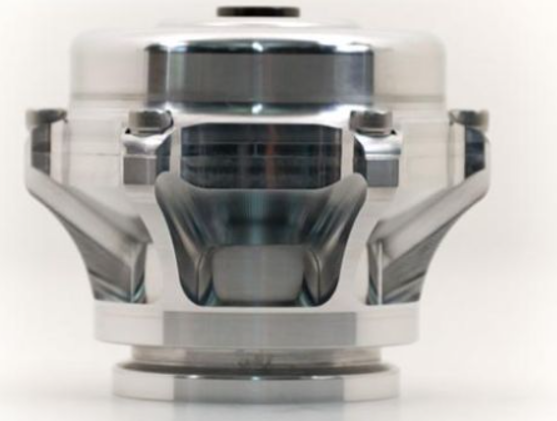
  1. The Role of Blow-Off Valves and Wastegates: Venting, Flutter, and Protecting Your Turbo from Compressor Surge

    The Role of Blow-Off Valves and Wastegates: Venting, Flutter, and Protecting Your Turbo from Compressor Surge

    Turbocharged engines live in a world of extreme pressure, heat, and airflow. Managing that pressure is the difference between a turbo that lasts 100,000 miles and one that fails in a single pull. Two components do the heavy lifting here: blow-off valves (BOVs) and wastegates.

    While they serve different purposes, blow-off valves and wastegates play important roles in many turbocharged gasoline applications. The BOV manages pressure on the compressor side during throttle closure, while the wastegate regulates turbine energy and boost pressure. Let’s break down how they work, why they matter, and how they help protect a turbocharged system.

    What Is Compressor Surge and Why Is It So Dangerous?

    Compressor surge happens when the turbo is producing more airflow than the engine can accept, usually during sudden throttle closure. The pressurized air has nowhere to go, so it reverses direction and slams back into the compressor wheel.

    This creates:

    • Violent pressure oscillations
    • Turbo shaft stress
    Read more »
  2. Turbocharger Myths That Won't Die: Separating Fact from Fiction

    turbo boost pressure controller

    Turbochargers have transformed everything from diesel trucks and daily drivers to race cars and side-by-sides. Yet despite decades of development, some myths continue circulating through forums, social media, and garage conversations. Unfortunately, believing these misconceptions can lead to poor turbo selection, disappointing performance, and unnecessary expenses.

    Let's break down four of the most common turbocharger myths and explain what really affects performance.

    Myth #1: More Boost Always Makes More Power

    Turbosmart e-Boost2 boost controller displaying 40 PSI

    This is perhaps the most common misunderstanding in the performance world.

    Many enthusiasts focus solely on boost pressure numbers. If 15 PSI is good, 25 PSI must be better, right?

    Not necessarily.

    Boost pressure tells you how much manifold pressure the engine is seeing above atmospheric pressure, but it does not tell you by itself how much air mass is entering the engine or how much power the engine will make.

    Horsepower is influenced much more directly by the mass of oxygen the

    Read more »
  3. Horsepower in a Box! Unlock Your Ride’s Full Potential with TurboKits.com

    Horsepower in a Box! Unlock Your Ride’s Full Potential with TurboKits.com

    Horsepower in a Box! Unlock Your Ride’s Full Potential with TurboKits.com

    What if you could unbox raw power, precision engineering, and decades of performance expertise all in one place? Welcome to Horsepower in a Box, your ultimate guide to transforming your vehicle into a street-slaying, track-ready beast with the help of TurboKits.com.

    For over 20 years, TurboKits.com has been the go-to destination for enthusiasts, tuners, and pros who demand more from their machines. Whether you're chasing dyno numbers, carving corners, or just want to feel that turbo surge every time you hit the throttle, we’ve got the parts, and the passion, to get you there.

    Turbo Upgrades & Complete Turbo Kits

    Let’s start with the heart of the boost: the turbocharger. From bolt-on upgrades to full-blown custom kits, TurboKits.com offers:

    • Direct-fit turbo upgrades for popular platforms- perfect for squeezing more power without major mods.
    • Complete turbo kits engineered for performance and reliability, including
    Read more »
  4. Ram 6.7 Cummins Diesel Vs. Ford 6.7 Powerstroke Diesel: Detailed Comparison

    Ram 6.7 Cummins Diesel Vs. Ford 6.7 Powerstroke Diesel: Detailed Comparison

    Intro

    The comparison between the Ram and Ford truck has proven to be a formidable debate among experts because both vehicles are rated highly due to their outstanding features.

    Some people may prefer the interior and exterior of the Ram over the Ford, while others may prefer Ford. But, to know which is better, you will have to look at their engines.

    This article contains a detailed comparison between the Ram 6.7 Cummins Diesel and the Ford 6.7 Powerstroke Diesel engine. You will be able to decide after reading this article which truck is the best.

    Ram 6.7 Cummins Diesel Vs. Ford 6.7 Powerstroke Diesel: Detailed Comparison

    These two 6.7L engines are powerhouses with fascinating differences. Some believe that the 6.7 Cummins is a better workhorse, while others think the 6.7 Powerstroke has better overall functionality. 

    The analysis will be done on specific areas like specifications, features, performance, towing payload, and prices. So, let us find out which truck is  better all-round

    Read more »
  5. Garrett Turbo Tech: Reverse Rotation Turbochargers

    Garrett Reverse Rotation Turbochargers

    Reverse Rotation Turbochargers: A Unique Performance Configuration For Single and Twin Turbo Applications shared from Garrett - Advancing Motion

    Reverse Rotation Turbochargers

    Reverse rotation, mirrored turbos, symmetrical turbos, mirror image turbos are the many names that identify this counter clockwise rotating turbo configuration. Truth be told, there’s nothing uber special about them when compared to their standard rotation counterparts. However, the only parts they share are the bearing cartridge and some bolts and clamps. Today we will look at the reverse rotation product line from Garrett and see what sizes and specs are available as well as give you some insight into the different application types that use these products.

    The reverse rotation turbo is a mirrored version of the standard rotation turbo. This means a different compressor housing, a different compressor and turbine wheel shaft assembly, and a different turbine housing to make it all work. Exhaust air must enter the turbine housing from the

    Read more »
  6. Garrett Turbo Tech: Turbine Housings 101

    Garrett Turbine Housing 101 - Turbo Knowledge

    Garrett Turbo Tech: Turbine Housings 101 shared from Garrett - Advancing Motion

    This article is your one stop guide to understanding the differences between turbocharger turbine housings, flange types and, flange specs. Have you ever asked yourself, “What’s the difference between T3, T4, T6, and V-band turbine housings”? Or maybe, “will a T25 inlet flange work on a T3 manifold”? Or, “what does T3 T4 mean?” If so this article is for you.

    Let’s start with some basic principles.

    Turbine housing– collects exhaust gasses from an engine and directs it through a volute (passage) which drives the shaft wheel assembly of a turbo causing it to spin. Turbine housings are also referred to as the “hot side” of the turbo because of its continuous exposure to hot exhaust gas. Turbine housings are very robust and manufactured using hi-temp materials with temperature ratings up to 1050° C.

    Volute– the passage in which the exhaust gasses travel through, from turbine housing inlet to turbine housing outlet.

    Read more »
  7. The Underdog: Burton Hughes - 2013 Hyundai Genesis Coupe

    The Underdog: Burton Hughes - 2013 Hyundai Genesis Coupe

    ... Hughes Instagram: @3.8t_rspec Twitter: @BurtonHughes ENGINE Precision Turbo 6266 Ball Bearing Gen 2 Turbokits.com FMIC Killer Glass glass radiator hose Forge BOV TurboSmart Compgate ...(more...)

    Read more »